
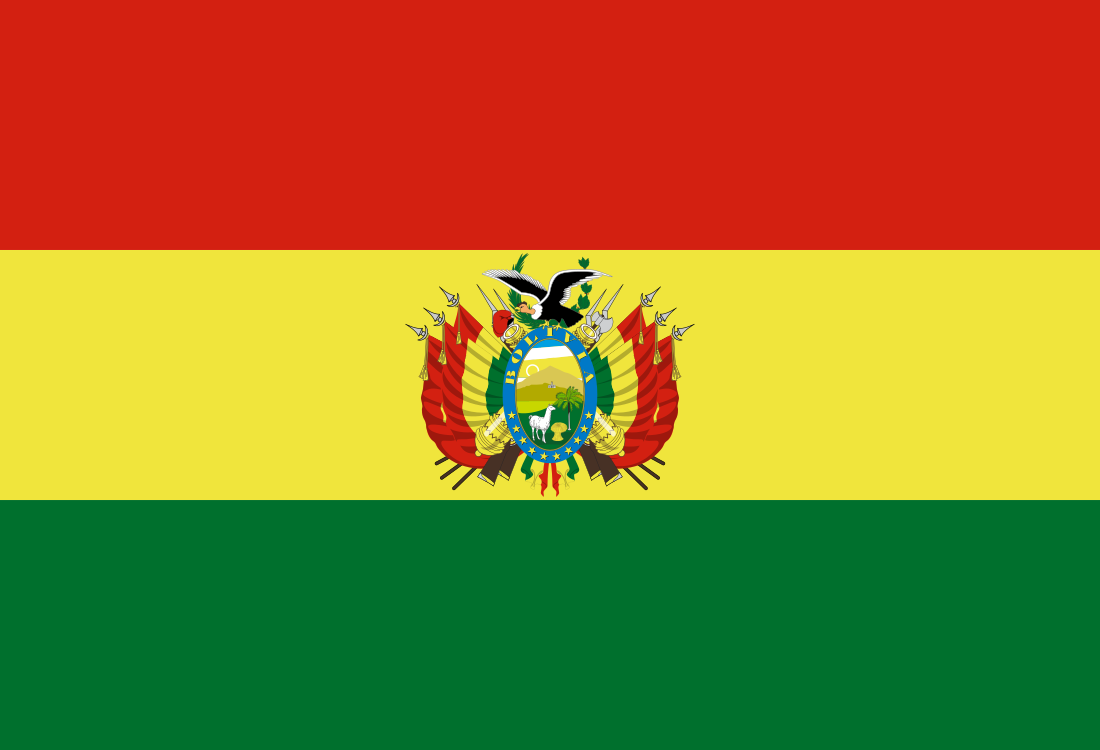
HISTORIC TIMELINE
The Tiwanaku polity, a significant pre-Columbian civilization, collapsed around this time.
This conflict marked the beginning of Inca rule in western Bolivia.
Spanish conquistadores arrived, forcibly taking control of the region in the 16th century.
An unsuccessful rebellion against Spanish rule occurred in Sucre on May 25.
The Republic of Bolivia was established, named after Simón Bolívar.
Bolivia lost its coastal territory to Chile during the Pacific War.
The Acre territory was lost to Brazil after its takeover from 1899 to 1903.
This revolution established universal suffrage and nationalized tin mining.
The last non-elected military ruler left office, marking a transition to democracy.
Evo Morales became president, leading to significant economic growth and political stability.
Bolivia is classified as a partly-free democracy by Freedom House.